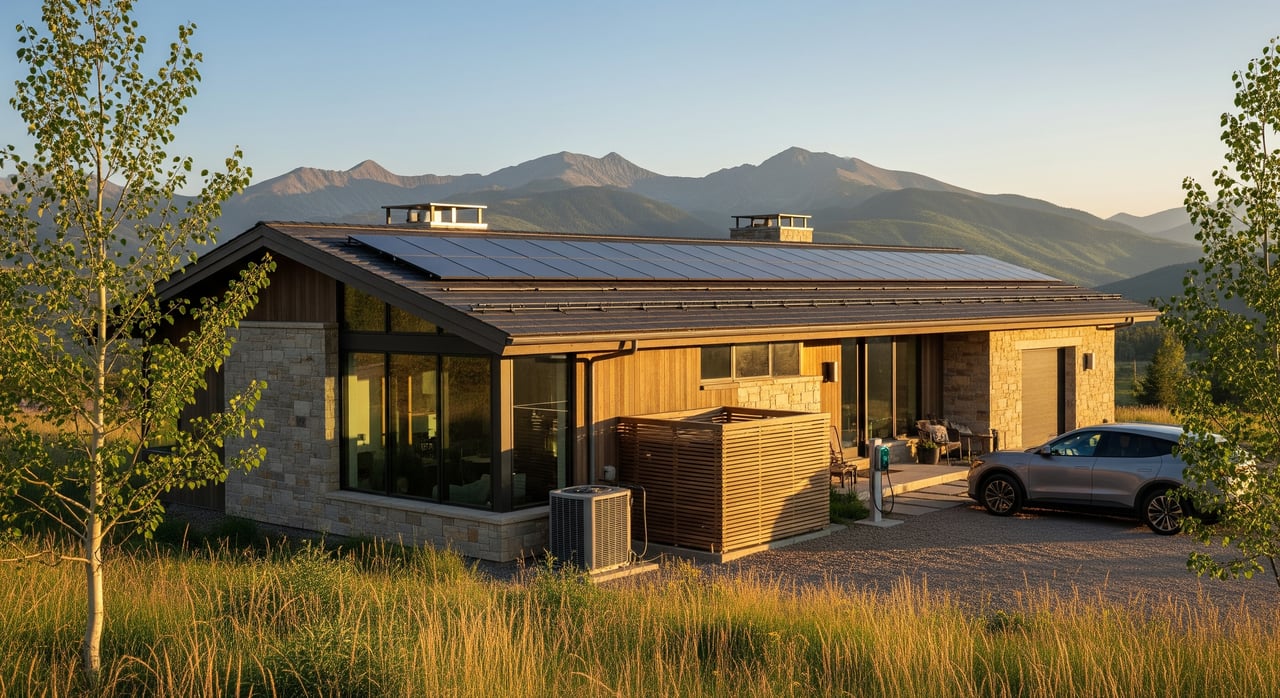
Energy-Smart Upgrades For Buena Vista Homes
January 1, 2026
January 1, 2026
At 8,000 feet, Buena Vista gives you brilliant sun and brisk winters that test any home. If you are thinking about comfort, lower bills, or making smart upgrades before selling, you are not alone. The right projects in 81211 can make your home feel warmer, work better, and stand out with buyers. In this guide, you will learn which upgrades pay off most in our high‑altitude climate, how to phase the work, and what to document for resale. Let’s dive in.
Buena Vista’s elevation near 8,000 feet means colder nights, longer heating seasons, and bigger day‑to‑night temperature swings. Small air leaks and thin insulation add up to real heat loss over more months of the year. Tightening the envelope makes a bigger difference here than in many lower elevation markets.
You also get strong sun and clear skies. That boosts the value of passive solar design and makes solar PV output attractive. Low humidity and freeze cycles push you to pick durable windows and details that handle ice, snow, and thermal movement.
When you combine a tight envelope with balanced ventilation and a heating system rated for cold weather, you get steady comfort and predictable operating costs. That package is exactly what many buyers look for in Chaffee County mountain homes.
If you only do one thing, start here. Air sealing cuts drafts and keeps expensive heat indoors during long Buena Vista winters. Focus on common leak points like attic penetrations, recessed lights, rim joists, sill plates, and window or door perimeters.
Once leaks are sealed, add insulation where it counts most. Attic and roof insulation usually deliver the biggest returns, followed by exterior walls and then basements or crawlspaces. Pay attention to continuous insulation and thermal bridges at wall and foundation connections to keep warm surfaces inside.
When you tighten a home, plan for fresh air that does not waste heat. A balanced system with heat recovery protects indoor air quality while keeping the warmth you just paid for.
In a cold, dry climate, mechanical ventilation with heat recovery is a smart partner to air sealing. HRVs recover heat from stale air as they bring in fresh air. In some cases, ERVs can help moderate moisture transfer. Either way, these systems reduce the penalty of winter ventilation and keep your home feeling healthy after you button it up.
High‑performance windows improve comfort as much as energy use. You will feel fewer cold drafts and less chill near the glass. Look for low U‑factor frames and glazing, warm‑edge spacers, and quality weatherstripping. Double low‑E with argon often suits many exposures, while triple‑pane can shine on the coldest or windiest sides of the house.
Use solar heat wisely. South‑facing windows can use higher solar heat gain coefficients to capture winter sun. Control east and west exposures with shading to avoid hot afternoons in summer. In this climate, choose products rated for large temperature swings and freeze‑thaw durability.
Modern cold‑climate heat pumps work well in many Colorado mountain towns, including Buena Vista. They deliver efficient heat in low temperatures, although capacity drops as outdoor temperatures fall. Look at manufacturer capacity and efficiency curves at low outdoor temperatures, and speak with installers about altitude effects on performance.
Ductless mini‑splits are great for zoned retrofits and additions. Ducted cold‑climate systems can serve whole homes. Many households keep a simple backup like electric resistance or a propane furnace for the coldest snaps or fast recovery. Pairing a heat pump with insulation upgrades and solar PV can lower net operating costs. You can explore consumer‑friendly guides from the U.S. Department of Energy in their DOE efficiency resources.
Ground‑source systems deliver steady, high efficiency because they use the ground as a heat source and sink. They are less sensitive to outdoor air temperature than air‑source units. While installation costs are higher due to drilling or trenching, long‑term performance is strong and can be attractive for buyers who value operating cost stability.
In‑floor radiant heat offers comfort that mountain homeowners love. Warm surfaces and less stratification help counter cold floors and quick heat loss. Radiant pairs well with thermal mass and passive solar strategies, and it can run on low‑temperature sources like heat pumps or high‑efficiency boilers. Plan controls carefully, since radiant systems respond more slowly than forced air. Choose floor finishes that conduct heat well for best results.
Right‑sizing matters. Oversized boilers or heat pumps short cycle and waste energy. Ask your contractor to perform load calculations that reflect elevation, actual insulation levels, and window performance. Zoning and smart thermostats can fine‑tune comfort and reduce runtime, especially with mini‑split systems.
South‑facing glazing can deliver meaningful free heat on clear winter days. A mix of proper glass selection, roof overhangs, and simple operable shades helps you capture heat in winter and block it in summer. Add thermal mass where practical, like an exposed concrete slab, to store daytime gains and release them overnight as temperatures drop.
Always insulate and air seal first. Passive solar gains only pay off if your home can hold onto the heat you collect.
Colorado’s dry winter air makes heat recovery helpful. HRVs bring in fresh air while salvaging heat from exhaust air. ERVs can help manage moisture where that is a concern. After tightening a house, continuous heat‑recovery ventilation protects indoor air quality without a large heating penalty.
Good detailing prevents moisture problems. Keep warm, moist indoor air from reaching cold surfaces to reduce condensation. Pay attention to roof insulation and air sealing to limit ice dams. Seal and insulate foundation interfaces to avoid cold spots and infiltration paths.
High solar irradiance at altitude gives you strong PV production per installed kilowatt. A south‑facing roof is ideal, but east and west arrays can still perform well. A steeper tilt helps shed snow and boosts winter output. Battery storage adds resilience during outages, a common concern in mountain communities, and can improve the value of electrified heating.
Economics depend on your utility rates, incentives, system size, and electric loads like heat pumps. For a deeper look at solar potential and performance at elevation, review NREL solar resource data. For general guidance on solar and home energy improvements, the DOE efficiency resources offer consumer‑friendly overviews.
Federal incentives exist for residential solar as well as certain heat pumps, insulation, and weatherization measures. Colorado state and utility programs may also be available, and some programs vary by income or contractor participation. Program rules change, so confirm current details with federal guidance and the Colorado Energy Office before you buy or schedule work.
A quick approach is to verify eligibility with your tax professional, check current program listings with the Colorado Energy Office, and ask your installer to document that selected equipment meets the latest requirements.
Energy and comfort features are top of mind for many buyers in Buena Vista and across Chaffee County. The upgrades below tend to be both livable and market‑visible.
To strengthen buyer confidence, provide an energy audit summary, permits, equipment manuals and warranties, and before‑and‑after utility bills when available. Clear documentation helps buyers see the full value.
Pick teams who understand mountain conditions. Ask for recent high‑altitude projects and references in Buena Vista or nearby towns. Confirm they perform blower door testing and can show measured improvements in air tightness.
For mechanical systems, request model‑specific low‑temperature performance data and a written load calculation that reflects elevation and your actual insulation levels. Verify permit requirements with the Town of Buena Vista or Chaffee County, since heating, electrical, and some insulation work often require inspections.
Service heating systems annually so they run safely and efficiently. Keep exterior vents and intakes clear of snow. If you have solar, clear accumulated snow when safe to do so and monitor production.
Use shading in summer to control heat gain, and set heat pump thermostats for steady, efficient operation during winter. On mild days, quick window ventilation can freshen the home without a large heat penalty.
Buena Vista’s climate rewards smart upgrades that work with the sun, protect against heat loss, and keep fresh air flowing. If you are weighing projects before listing or after closing in 81211, let a local expert help you plan for comfort and value. When you are ready to talk next steps for your home sale or search, connect with Julie Kersting for local guidance.
Ready to take the plunge into a mountain property? Maybe a house right in town is up your alley? Contact Julie today, she is passionate about making sure you find just the home of your dreams.
JULIE KERSTING
306 E Main St, PO Box 1105 Buena Vista CO 81211